‘A walled garden is like a room: its decoration and layout evolve as ways of life and tastes change’ – Lady Jane Kaplan
(Image credit: Lockstock Studios/Rosebery Estates)
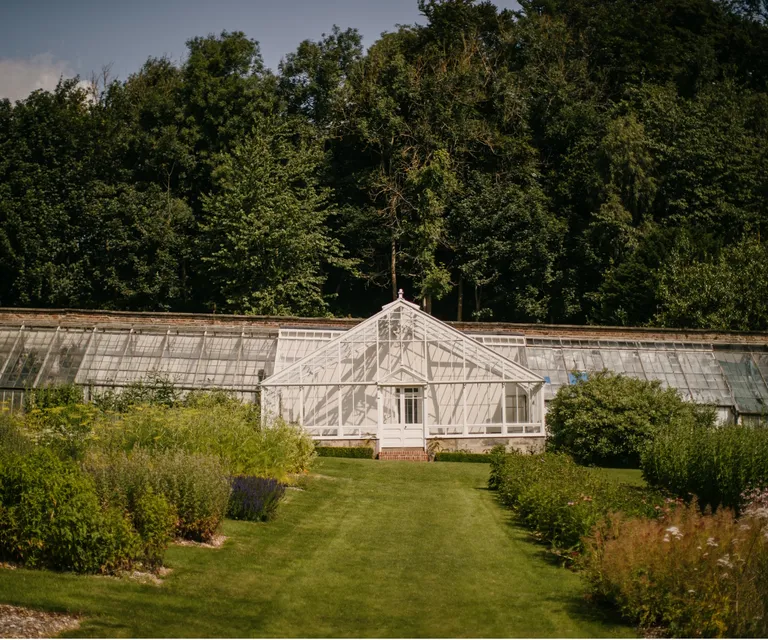
Entering through the south wall, you’re welcomed by the magnificent sight of the garden’s 1904 glasshouse.
It’s just one of several historic features here. A closer look at the walls reveals fireplaces and internal heated flues from the the garden’s original 1818 construction by renowned garden architect John Hay, commissioned by the 4th Earl of Rosebery.
Built on a gentle slope to guide cold air out and keep warm air in, the garden was a highly productive kitchen garden, supplying fruit, vegetables, and cut flowers for the estate and even London markets.
After the world wars, the garden was no longer heavily relied upon for food, but Lady Jane recalls it remained prized for growing show-winning produce.
‘Mr. Donald was the gardener when I was growing up in the 1960s. I remember him as rather fierce, and the walled garden – which my siblings and I needed permission to visit – as very regulated. It was somewhat of a forbidden place in which we were to stay away from the produce,’ she describes.
Over the following decades, the garden was gradually reclaimed by nature as its use continued to decline. Chest-high weeds took hold and sections of the original walls began to crumble.
That was until 2018, when Lady Jane decided to begin restoring it, returning it to productivity once again – this time as a space she no longer has to sneak into to enjoy.
Lady Jane Kaplan, sister of the 8th Earl of Rosebery (formerly Harry Dalmeny), has been instrumental in the transformation of Rosebery Estates over recent decades. Michael Kaplan, Jane’s husband, is a writer and historian, originally from the United States. For the past 35 years, the couple have worked in partnership in corporate and commercial communication.