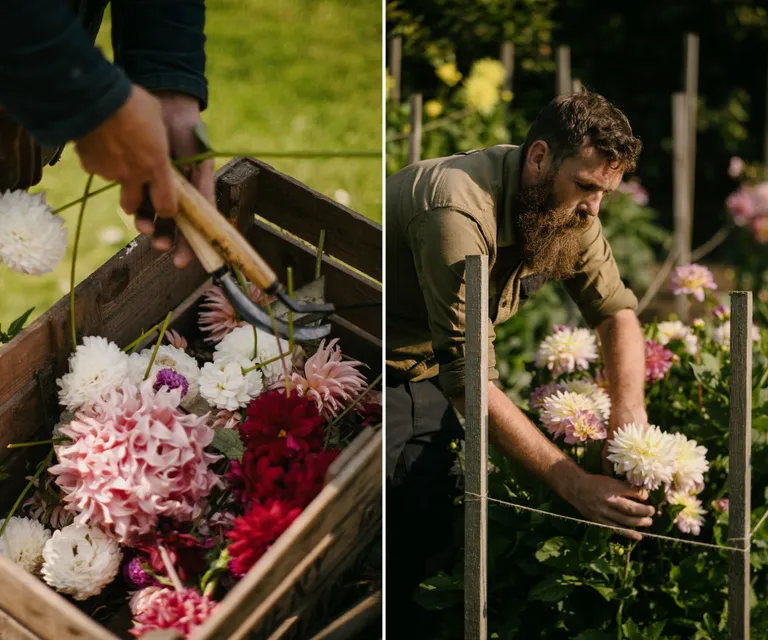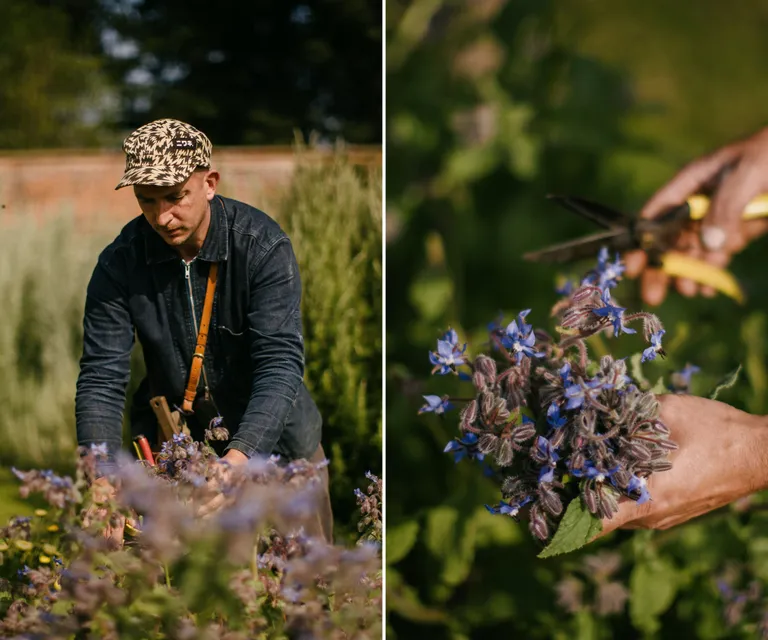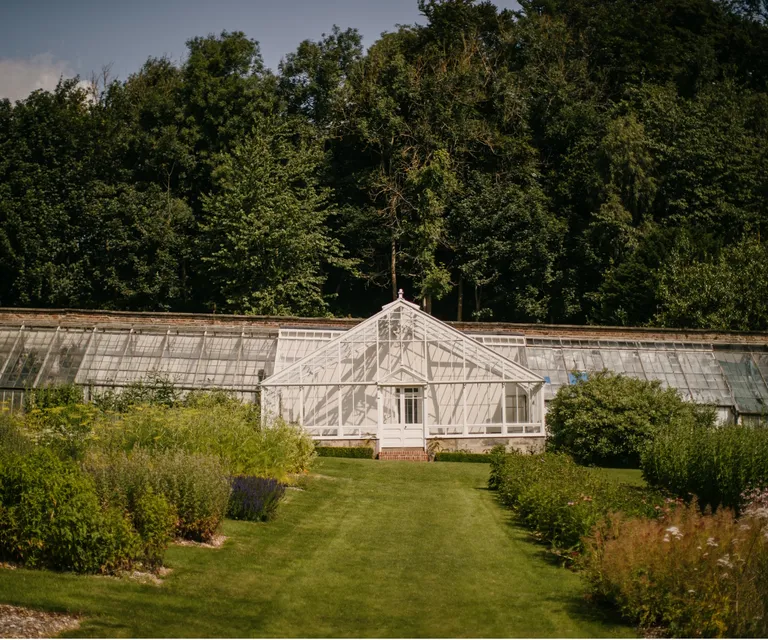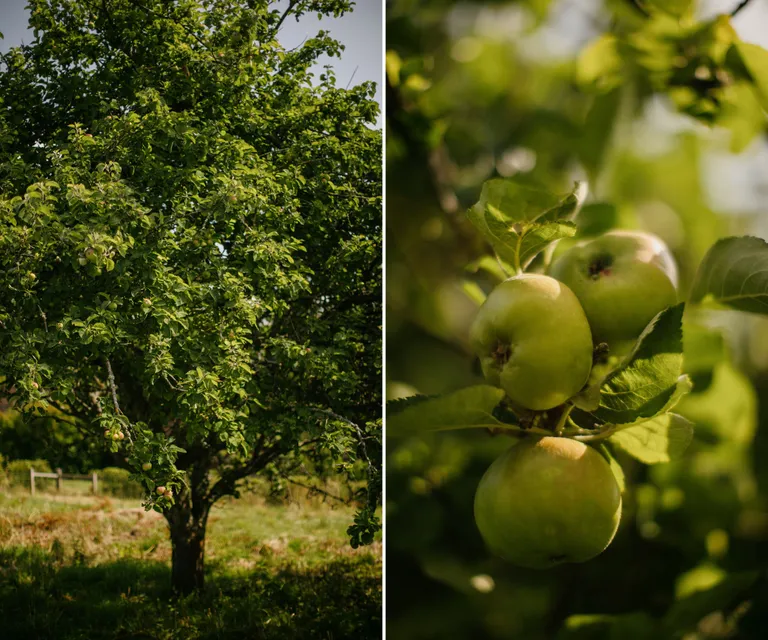
Fall brings fruit harvests of peaches, grapes, figs, apples, pears, plums, and more
(Image credit: Lockstock Studios/Rosebery Estates)
Peak harvest season in fall brings Dalmeny Walled Garden back to its roots as a kitchen garden.
Espaliered fruit trees of apples and pears adorn walls with shiny fruit around the entire garden. Many of them are between 80-100 years old.
‘It’s a disciplined pruning and training technique to espalier fruit trees,’ says Joseph. ‘You essentially remove the apical bud (the upward leader) to encourage lateral growth and tie the side branches in place,’ he describes.
One of the particularly important heritage varieties here is the ‘Lord Rosebery’ apple – a Scottish dessert apple from 1934, named in honor of the 5th Earl of Rosebery and UK Prime Minister, Archibald Philip Primrose.
One thing Lady Jane and her team were keen to maintain through the restoration is a sustainable gardening approach. Nothing goes to waste here.
‘If the apples aren’t harvested to be eaten, we make apple juice and apple cider vinegar, among other things,’ Joseph explains.
Even plant material that can’t be added to the garden’s four compost bays is thrown into a bonfire to create ash for the garden, a natural soil improver.
‘Ash actually helps with carbon sequestration, drawing it out of the atmosphere,’ explains Joseph. ‘As a soil amendment, it retains nutrients and aids aeration,’ he adds.
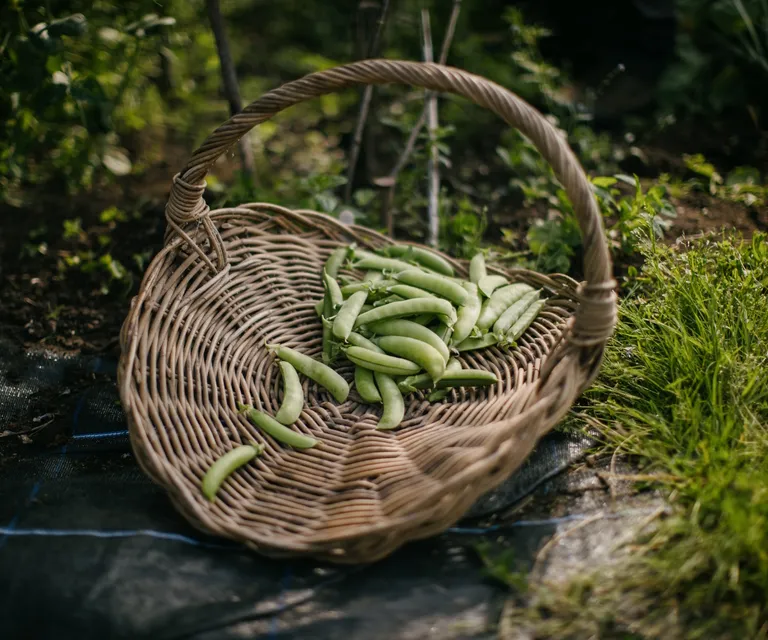
Some of Dalmeny’s more unusual crops include Japanese wineberries and a sichuan pepper shrub
(Image credit: Lockstock Studios/Rosebery Estates)
Beside the herb beds, a dedicated vegetable patch is home to a wide range of crops, including marrows, leafy vegetables, and peas.
Walking through, your eyes are drawn downward to the sound of a striking white path made of crushed seashells – a trace left behind from Lady Jane’s childhood.
‘My sister and I collected white shells from the beach and crushed them up to fill paths in the garden,’ she reminisces. ‘As we worked through the debris and cleared the nettles, we found them again and have now repurposed them here,’ she explains.